

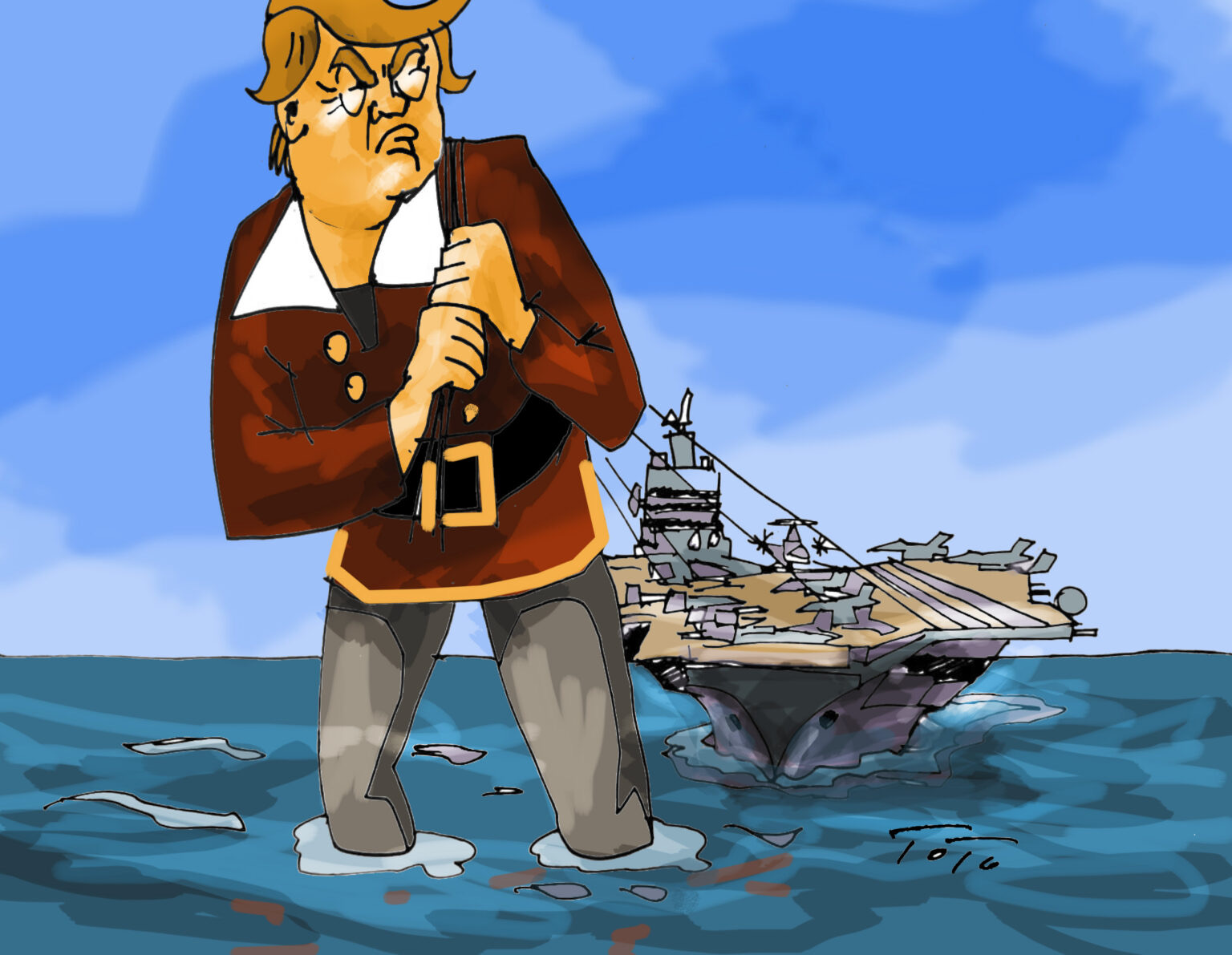
The most widely discussed topic these days continues to be the war involving the US and Iran and its future. There are different views on what the region and the world will look like after the end of this war. One thing is clear: nothing will remain as it was before, and serious realignments will take place in the region regardless of the outcome.
It is evident that a change of power has not occurred in Tehran, and there appears to be no significant internal disturbances; therefore, a change of government does not seem likely at this point. Yes, Iran’s key infrastructure has been damaged, but this still does not mean the war is over, as aerial attacks are continuing. However, what is important for Armenia is not only what will happen with Iran itself, but also what will happen in Iran’s neighboring countries and what developments may occur in the Trump scenario.
The most important question that should concern Armenia is what will happen to Iran and its policy in the South Caucasus after the war ends. We also need to understand what policy the United States is pursuing toward Iran, because the information coming from Washington is highly contradictory. It is still unclear what approaches the Trump administration has on this issue, since President Donald Trump himself periodically makes a variety of statements about ending the war, possible negotiations with Iran, and other developments which sometimes contradict each other.
From Armenia’s perspective it is also very important to understand what future the Trump Route for International Peace and Prosperity (TRIPP) will have after the end of the US–Iran war, since one of the main objectives of the TRIPP approach was to exert influence along Iran’s external borders. Another goal of this approach was to enable the routing of energy resources in a way that would bypass Iran, allowing them to be transported from Central Asia to the South Caucasus and via Turkey to Europe. TRIPP could also provide an alternative route for Azerbaijan to bypass Iran while connecting with its enclave Nakhijevan, which would make Azerbaijan less dependent on Iran.
All this makes it crucial for Armenia to understand, in the event of continued US–Iran tensions, what the American presence within the TRIPP project would look like, including possible security provision by private US organizations. Would such actors be regarded by Iran as legitimate targets in the event of future escalation, and if so, which possible types of actions might be taken against them?
In recent days, we have seen that Iran’s targets have included not only military but also economic assets, with the intention of striking at US economic interests in neighboring countries. Consequently, the TRIPP, located just a few hundred meters from Iran’s border, could potentially become a target for Iran under conditions of heightened escalation – or for any other reason.
Another important question is if the United States moves toward negotiations and the eventual normalization of relations with Iran, to what extent would Washington be willing to continue pursuing the TRIPP project. Iran views the project as problematic, since it would allow Azerbaijan to establish a direct connection with Nakhichevan not through Iran, but through a route crossing Armenian territory.
In other words, either negotiations with Iran begin, during which Tehran may demand that the United States abandon any military or economic projects located near its borders; or, if negotiations do not take place and the war continues, it cannot be ruled out that Iran may also turn this economic project into a target, just as economic projects in certain Arab Gulf countries — currently linked to US interests — have become targets.
At present, Armenia is considered a friendly state by Iran, and anti-Iranian actions typically do not originate from its territory. However, if Iran perceives that its national interests are being challenged, it is natural that Tehran would act to fully defend those interests.
Another scenario is possible: military operations may be halted without formal peace being established, and the parties may fail to reach a diplomatic settlement. In this case as well, it remains unclear what approach Iran would take toward TRIPP. But if tensions persist, the implementation of this route cannot be considered certain.
